






The world needs to build more than two billion new homes over the next 80 years

Contents |
[edit] Introduction
By the end of this century, the world’s population will have increased by half – that’s another 3.6 billion people. According to the UN, the global population is set to reach over 11.2 billion by the year 2100, up from the current population which was estimated at the end of 2017 to be 7.6 billion – and that is considered to be ‘medium growth’.
The upscaling required in terms of infrastructure and development, not to mention the pressure on material resources, is equivalent to supplying seven times the population of the (pre-Brexit) European Union countries, currently 511 million. With the global population rising at 45m per year, comes the inevitable rise in demand for food, water and materials, but perhaps most essentially, housing.
[edit] Housing needs are changing
Average household sizes vary significantly between different continents and also by country. According to the UN, recent trends over the last 50 years have also shown declines in household sizes. For example, in France, the average household size fell from 3.1 persons in 1968 to 2.3 in 2011, the same time the country’s fertility rate fell from 2.6 to 2.0 live births per woman. In Kenya, the average household size fell from 5.3 persons per household in 1969 to 4.0 in 2014, in line with a fertility decline from 8.1 to 4.4 live births per woman.
Increasingly ageing populations, particularly in developed countries, are causing a demographic shift in future care needs, but it also means that people are staying in their own homes for longer, which affects the cycle of existing housing becoming available each year. One of the most marked changes has been the rise in one and two-person households in the UK and other developed countries.
Statistics published by the National Records for Scotland, for example, reveal the influence of these changing demographics, with future household demand rising faster than population growth. By 2037, Scotland’s population growth is forecast to be 9%, with growth in the number of households forecast to be 17%. This 8% difference is in effect the household growth demand from the existing population.
In England, between now and 2041, the population is expected to increase by 16%, with projected household growth at 23%, resulting in a 7% difference in demand.
As people live longer and one and two-person households increase, the number of future households required rises faster than the population. In 2014, urban issues website CityLab dubbed the situation the ‘world’s ticking household bomb’.
As more developing countries deliver infrastructure and progress similar to developed countries – improving the standard of living and extending life expectancy –
household sizes will decrease, placing greater demand on supply of new housing. So, if this difference between household demand and population growth occurs globally at around 7-8% over the next 80 years, this will require an additional 800 million homes.
Taking an average global three-person household (1.2 billion homes) coupled with that 8% demographic factor of total global population over the period results in a need for more than two billion new homes by the end of the 21st century.
[edit] Meeting the demand
The current and future demand for new housing is compelling governments to push for further innovations in ‘offsite’ – prefabricated – construction to speed up the supply of new housing. The UK Industrial Strategy published in November 2017 has a strong focus on offsite construction for the future. This sector has grown rapidly over the last decade with new markets in healthcare, education and commercial buildings. But for offsite construction to deliver more houses at a faster rate means looking at alternative solutions to the problem.
Things that slow down the rate that offsite houses are built include the lengthy preparation time required for sub-structures and foundations; delays to the installation of utilities and building services; and a lack of well-trained construction-site managers capable of delivering the complex logistics involved. With more than 65 million people displaced by man-made and natural disasters globally, this puts further pressures on countries unable to supply enough new housing as it is.
The issue of availability of materials to meet the demands of constructing two billion new homes emphasises the need for countries to resource them as efficiently as possible. Government policies which encourage the sustainable design of new buildings to maximise future re-use, reduce carbon emissions and manage resources properly will be essential. Over the next 30 years, the countries which promote policies to help sustain and increase new housing provision will be more likely to avoid problems in sourcing materials and price hikes.
For many countries, housing supply is a now a hot topic for national debate and policy strategy. For the rest of the world it will soon become the most pressing issue facing governments this century.
Original article published in The Conversation. It was also published in AT Journal summer edition 2018.
Written by Professor Sean Smith, Director of Institute for Sustainable Construction, Edinburgh Napier University
--CIAT
[edit] Find out more
[edit] Related articles on Designing Buildings Wiki
Featured articles and news
Costs and insolvencies mount for SMEs, despite growth
Construction sector under insolvency and wage bill pressure in part linked to National Insurance, says report.
The place for vitrified clay pipes in modern infrastructure

Why vitrified clay pipes are reclaiming their role in built projects.
Research by construction PR consultancy LMC published.
Roles and responsibilities of domestic clients

ACA Safety in Construction guide for domestic clients.
Fire door compliance in UK commercial buildings

Architect and manufacturer gives their low down.
Plumbing and heating for sustainability in new properties

Technical Engineer runs through changes in regulations, innovations in materials, and product systems.
Awareness of the Carbon Border Adjustment Mechanism
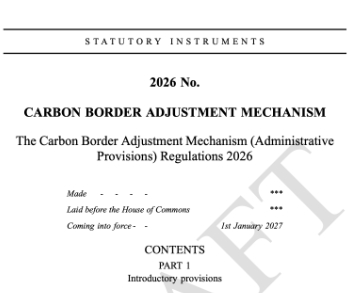
What CBAM is and what to do about it.
The new towns and strategic environmental assessments
12 locations of the New Towns Taskforce reduced to 7 within the new towns draft programme and open consultation.
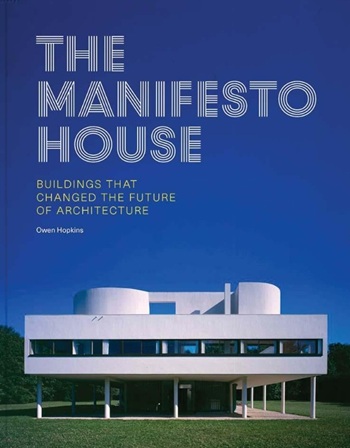
Buildings that changed the future of architecture. Book review.
The Sustainability Pathfinder© Handbook
Built environment agency launches free Pathfinder© tool to help businesses progress sustainability strategies.

Government outcome to the late payment consultation, ECA reacts.
IHBC 2025 Gus Astley Student Award winners

Work on the role of hewing in UK historic conservation a win for Jack Parker of Oxford Brookes University.
Future Homes Building Standards and plug-in solar
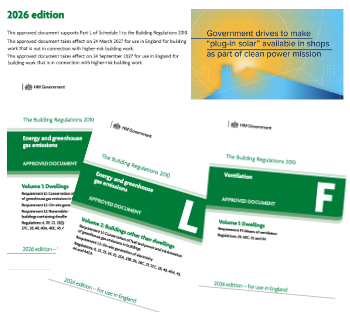
Parts F and L amendments, the availability of solar panels and industry responses.
How later living housing can help solve the housing crisis
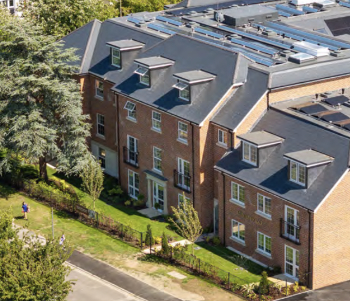
Unlocking homes, unlocking lives.
Preparing safety case reports for HRBs under the BSA
A new practical guide to preparing structural inputs for safety cases and safety case reports published by IStructE.
Male construction workers and prostate cancer

CIOB and Prostate Cancer UK encourage awareness of prostate cancer risks, and what to do about it.